-
07-08-2025
Plant microbiota: an invisible ally for plant growth
What is plant microbiota?
Plants offer a wide variety of habitats where different types of microorganisms can be found, forming what is known as plant microbiota. This microbiota is composed of a wide variety of microorganisms that coexist closely with the plant and perform key functions for its development, growth, and health.
Benefits of microbiota in plants
Microorganisms associated with plants can benefit them in different ways:
- Directly: They transform soil nutrients to make them more accessible, help resist adverse environmental conditions such as drought, or protect against pathogens.
- Indirectly: They activate the plant natural defense mechanisms, strengthening it against potential threats.
An organized and specialized microbiota
It is important to note that microbial communities are not distributed randomly. They follow specific organizational patterns, determined both by the environment and by the particular characteristics of each plant area. Therefore, the microbial composition varies significantly depending on the location of the plant, reflecting a specialization based on local conditions (Figure 1).
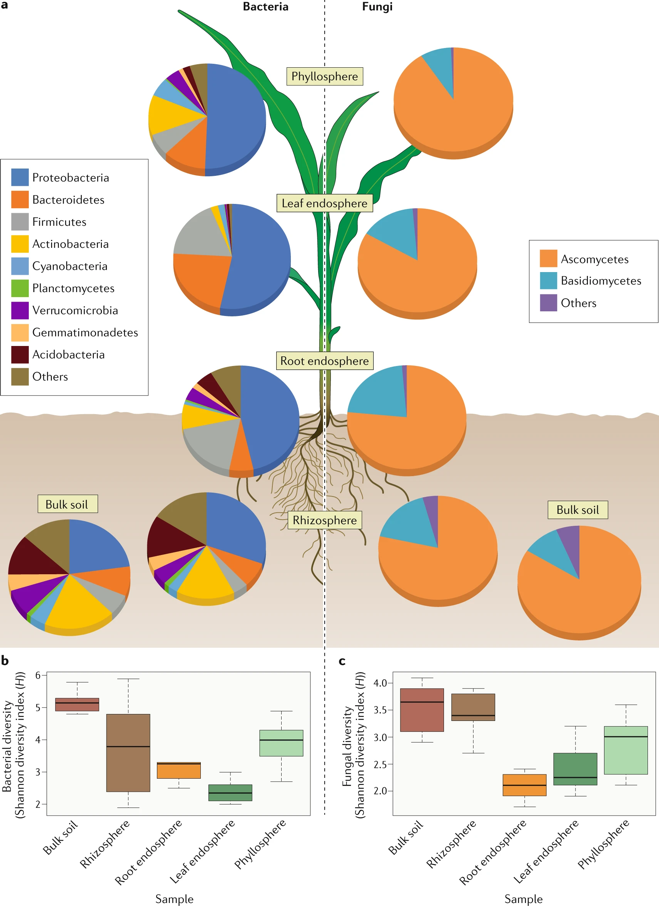
FIGURE 1. PLANT MICROBIOME IN DIFFERENT AREAS OF THE PLANT.
FIGURE EXTRACTED FROM HTTPS://WWW.NATURE.COM/ARTICLES/S41579-020-0412-1
THE MAIN HABITATS OF MICROORGANISMS IN PLANTS
The rhizosphere – The universe surrounding the roots
One of the richest microbial environments is the rhizosphere, the area surrounding the roots. Many bacterial groups present in the soil are also found here, but with a specific composition.
Microorganisms in the rhizosphere perform essential functions such as:
- Nitrogen fixation, carried out by bacteria such as Rhizobium.
- Organic matter decomposition, thanks to microorganisms such as Pseudomonas.
- Protection against soil-borne pathogens, with the action of bacteria such as Bacillus and Streptomyces.
The endosphere – The interior of the plant
Deep inside the plant, we find the endosphere, which corresponds to the internal tissues. This is where the so-called endophytic microorganisms live, establishing direct contact with plant cells.
These microorganisms, such as the genera Bacillus and Azospirillum, provide numerous benefits:
- They improve nutrient absorption, mobilizing elements such as nitrogen and phosphorus that would otherwise be unavailable.
- They protect against oxidative stress, thanks to the production of detoxifying enzymes.
- They stimulate the plant natural defenses, promoting the production of protective compounds.
The phyllosphere – Life in the aerial parts
The aerial parts of the plant, such as leaves and stems, make up the phyllosphere, an environment dominated by bacteria and fungi adapted to demanding conditions such as exposure to air and sunlight. Among the most common microorganisms are bacteria of the genus Pseudomonas.
The main functions of the phyllosphere are:
- Production of phytohormones: Microorganisms such as Bacillus subtilis generate auxins (which promote cell elongation) and cytokinins (which stimulate cell division), promoting growth and improving adaptation to changes in temperature or humidity.
- Protection against pathogens: Bacteria and fungi produce compounds that prevent pathogens from adhering to leaves and stems, reducing the risk of disease.
Although they share some benefits with rhizosphere microorganisms, those in the phyllosphere specialize in protecting and strengthening the aerial parts of the plant.
Plants not only provide diverse habitats for microbial life, but these microbial communities also have an impact on the health and well-being of the plants. The interaction between the microorganisms and the different parts of the plant reflects a complex system adapted to the specific needs of each part of the plant, ensuring its growth, defense, and ability to flourish in a changing environment.


