-
01-10-2026
TOTEM – Crop growth begins underground
TOTEM: Biotechnology to boost the crop from the roots up
There are times of the year when high temperatures lead to increased evaporative demand, soil warming and rapid water loss. Furthermore, these conditions can coincide with one of the most critical periods for the plant: its early stages of development and the first few days after transplanting.
But crop establishment does not necessarily begin in the field. For seed-grown crops, that story begins much earlier, right in the seedbed or nursery itself.
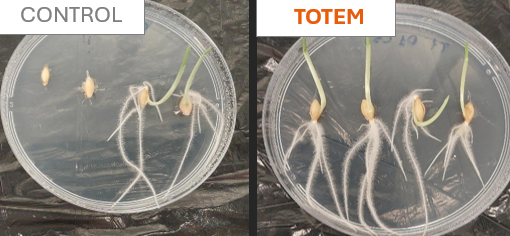
From germination, the root system begins to form, which will later support the plant’s development. Radicle emergence, the formation of lateral roots and root hairs, and the gradual interaction of the roots with surrounding microorganisms are fundamental processes during these early stages.
Therefore, the nursery provides an opportunity to take action from the very beginning. Applying beneficial microorganisms starting with the seed or during the early stages of development can foster a biologically active environment around young roots, supporting the plant during the formation of its root system and facilitating its subsequent establishment.
The goal is not merely to ensure that the plant germinates or continues to grow. The true challenge is for the plant to reach the transplant stage with an active, functional root system that is ready to adapt quickly to its new environment.
After transplanting, the plant moves from the relatively controlled nursery conditions to soil and environmental conditions that are completely different. During this period, the plant must reactivate root growth, generate new roots, progressively explore a larger soil volume and establish an efficient connection with available water and nutrients.
For many years, root development management has focused primarily on directly stimulating root growth. However, we now know that a much more complex environment exists around every root.
The rhizosphere—that thin layer of soil or substrate directly influenced by root activity—is one of the most biologically active areas of the crop. Within this system, interactions constantly occur between roots, microorganisms, nutrients, and organic compounds released by the plant itself.
These relationships can influence fundamental processes such as the availability of certain nutrients, root growth, metabolic activity and the crop’s ability to respond to stressful conditions.
Therefore, new root biostimulation strategies seek to go beyond simple root formation. The goal is to act on the entire substrate/soil–microbiota–root–plant system, promoting a biological environment that allows the crop to develop its full potential from its early stages.
In agriculture, we often think of the productive phases as the decisive moments in a crop’s life cycle: flowering, fruit setting, sizing or ripening. But to reach those stages with a strong plant, it is necessary to have first built a strong physiological foundation.
A plant that develops a limited root system starting in the nursery and during its first weeks will subsequently have a lower capacity to explore the soil and respond to the crop’s needs. Conversely, a plant that establishes an active, well-branched and functional root system from the outset has a more solid foundation to sustain plant growth and later face the reproductive phases.
TOTEM: Biotechnology to boost the crop from the roots up
TOTEM falls within this new approach, a next-generation root biostimulant and regenerator developed using Orygin 2.0 technology, based on Bacillus velezensis HE05 and its natural ferments.
Its approach goes beyond the traditional concept of a rooting agent. TOTEM combines the action of the microorganism with the metabolites obtained during its fermentation process and with compounds that promote the biological activity in the rhizosphere.
Thus, its strategy is based on three complementary actions:
- Probiotic action, through the presence of Bacillus velezensis HE05, which colonizes the root zone and interacts with it.
- Postbiotic action, through the metabolites generated during the fermentation process, some of which are directly related to plant biostimulation.
- Prebiotic action, through the supply of organic compounds that promote the development and activity of beneficial microorganisms present around the root.
This combination allows for coordinated action on different processes taking place from the earliest stages of development and during crop establishment.
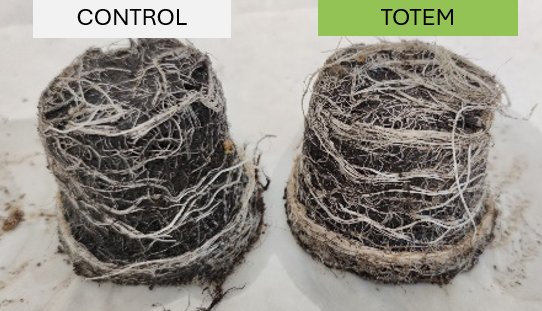
TOTEM promotes root system development by stimulating the formation of fine roots and root hairs, thereby increasing the contact surface with the environment. This facilitates water and nutrient uptake and improves the crop’s ability to utilize available resources.
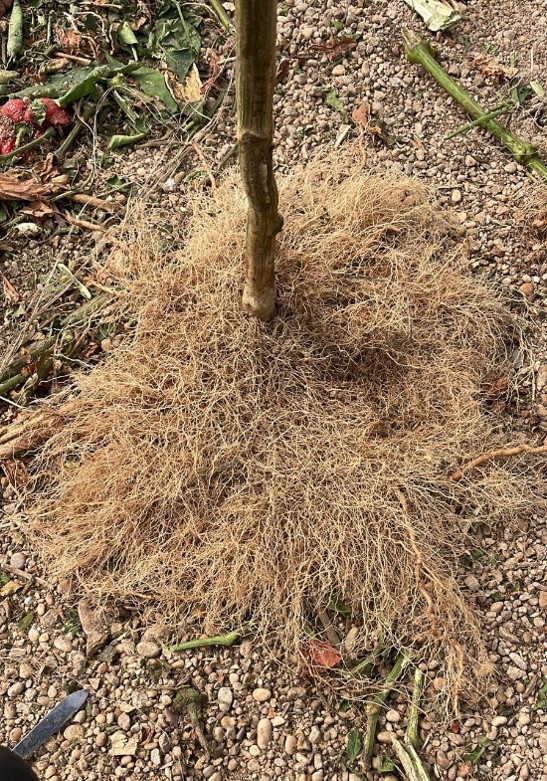
Bell pepper after 10 months of cultivation.
Furthermore, its ferments contain compounds of agronomic interest related to microbial and plant activity, helping to create a favorable environment for rhizosphere function.
The ultimate goal is not merely to generate more roots, but to achieve metabolically active, well-branched roots capable of establishing a more efficient relationship with their environment from the earliest stages of the crop.
Because a good yield doesn’t begin when the first flowers appear. Nor when the fruits start to develop.
It begins much earlier. It can begin from the seed itself. It begins at the root.